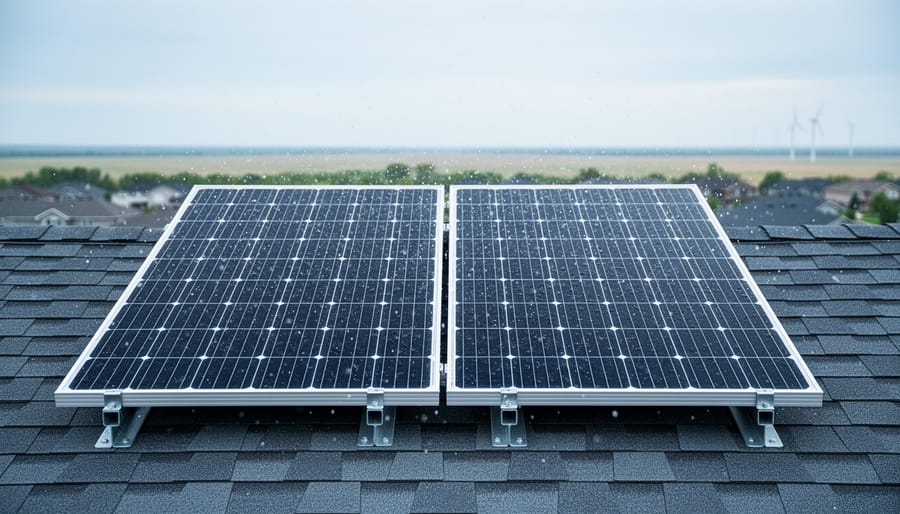
The mining sector is undergoing a quiet transformation in 2026, with solar technology milestones, corporate governance shifts, and sustainability certifications reshaping how the industry approaches energy. For those tracking where mining meets renewable energy, three verified developments stand out this year: Canadian Solar’s breakthrough FM Approvals certification for severe hail zones (announced July 30), Euro Sun Mining’s annual general meeting results (confirmed June 26), and Revolve Renewable Power’s board transition in April. These aren’t headline-grabbing announcements, but they signal concrete progress in how mining operations can integrate clean technology into their infrastructure and governance.
What makes this year’s Sun Energy News Update particularly relevant for Canadian readers is the focus on durability and certification standards. The FM 4478 and FM 4480 certifications now earned by TOPCon and HJT Low Carbon modules mean photovoltaic panels built in the United States can withstand extreme weather conditions that mining sites often face. This matters for remote operations in harsh climates where equipment failure carries steep costs. The convergence of corporate accountability, advanced solar engineering, and environmental commitment creates a clearer pathway for mining companies exploring renewable energy options without sacrificing operational reliability or economic viability.
What Changed: Key Mining Sector Developments in 2026
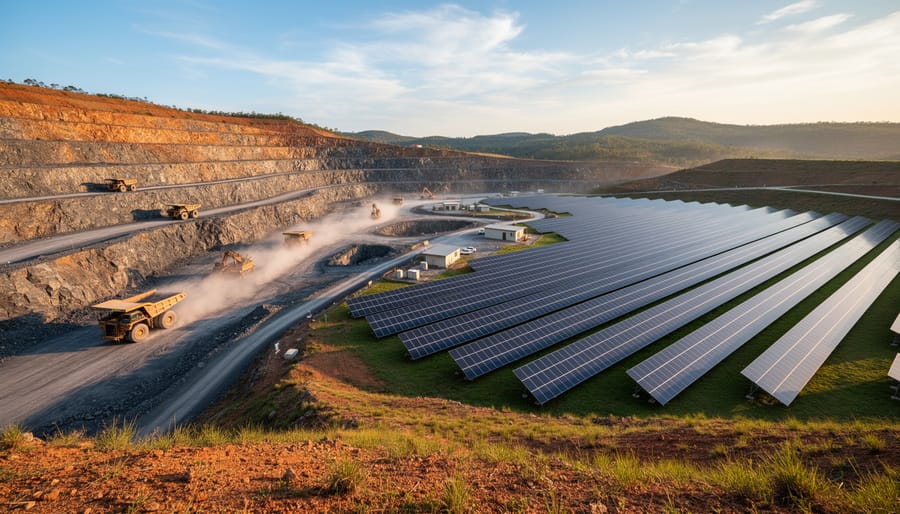
The mining sector’s connection to renewable energy became more visible in 2026 through three distinct developments spanning corporate governance, manufacturing innovation, and leadership transitions. Between April and July, announcements from companies operating at the intersection of resource extraction and clean technology revealed how traditional mining operations increasingly overlap with solar energy production and sustainable business practices.
These changes matter because they affect different aspects of the renewable energy value chain. Corporate governance updates signal company direction and stakeholder confidence. Manufacturing certifications remove real-world barriers to solar adoption in challenging climates. Leadership transitions shape how renewable projects move from planning to operation. Each development offers insight into how mining and energy companies navigate environmental responsibility while maintaining business continuity.
The timing reflects a sector in motion. While 2024 data showed 231 planned energy projects worth $351 billion being tracked across the renewable landscape, the 2026 announcements reveal which companies are advancing specific milestones, from shareholder votes to product certifications to board appointments. Understanding what changed and when helps investors, environmental advocates, and industry professionals assess progress toward Canada’s clean energy goals.
1. Euro Sun Mining Corporate Governance Update (June 2026)
Euro Sun Mining Inc. shareholders delivered a clear vote of confidence in the company’s direction at the 2026 Annual General Meeting. On June 26, 2026, the company announced that all director nominees listed in the May 13, 2026 management information circular were elected to the board, signaling continuity in corporate governance heading into the second half of the year.
The unanimous approval of the director slate matters for several reasons. First, it reflects shareholder satisfaction with management’s strategic vision and execution during a period when mining companies face increasing pressure to integrate environmental responsibility into operations. Second, stable leadership provides the consistency needed for long-term project development, particularly important for companies operating in sectors that intersect with renewable energy supply chains.
Mining companies like Euro Sun Mining play a less visible but essential role in the clean energy transition. The metals and minerals extracted through mining operations supply the raw materials for solar panels, battery systems, wind turbines, and grid infrastructure. Copper, silver, aluminum, and rare earth elements all pass through mining operations before becoming components in renewable technology. When a mining company demonstrates governance stability through successful AGM results, it signals to investors and supply chain partners that project timelines and commitments will likely remain on track.
For stakeholders evaluating mining companies through an environmental lens, AGM outcomes offer insight beyond financial performance. Director elections reflect shareholder priorities, including environmental stewardship, community engagement, and responsible resource development. The June 2026 results suggest Euro Sun Mining’s approach aligns with investor expectations during a time when corporate accountability in natural resource sectors continues to rise. This kind of governance transparency helps environmentally conscious investors assess whether mining operations can support, rather than undermine, the broader clean energy goals they’re financing.
2. Canadian Solar Achieves Hail-Zone Certification Milestone (July 2026)
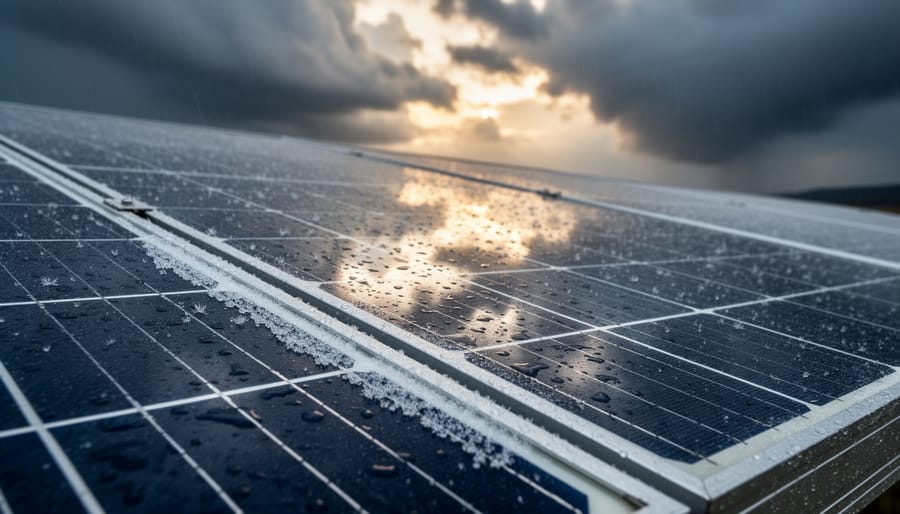
On July 30, 2026, Canadian Solar announced a significant breakthrough for solar resilience: their U.S.-manufactured modules became the first photovoltaic panels to earn FM Approvals certification for severe hail zones. This achievement marks a turning point for solar deployment in regions where extreme weather has historically deterred installation or driven up insurance costs.
The certification covers Canadian Solar’s TOPCon and HJT Low Carbon modules, which now meet both FM 4478 and FM 4480 requirements. FM 4478 sets standards for roof-mounted solar panels exposed to severe hail impact, testing modules against simulated hailstones at high velocities. FM 4480 addresses ground-mounted systems, evaluating structural integrity and performance retention after repeated hail strikes. Both standards require rigorous third-party testing that goes beyond typical industry benchmarks, verifying that panels can withstand conditions common to Alberta’s hail belt, the Canadian Prairies, and similar climates.
For homeowners evaluating solar alongside other energy efficiency upgrades tracked by an EnerGuide score this durability certification removes a critical barrier. Solar panels are long-term investments, typically warranted for 25 years or more. In areas where severe hail occurs annually, uncertified modules risk damage, output degradation, and costly replacements that undermine project economics.
The Canadian connection strengthens the story. While these modules are manufactured in the United States, Canadian Solar’s headquarters and research roots tie innovation back to Canada’s renewable energy ecosystem. The company’s focus on extreme-weather durability directly addresses Canadian climate realities, supporting solar adoption across provinces where weather concerns have limited deployment. This certification signals that solar technology can match the resilience Canadians expect from roofing, windows, and other building components designed for harsh conditions.
3. Revolve Renewable Power Leadership Transition (April 2026)
Revolve Renewable Power underwent a board transition in April 2026, a change that highlights the evolving governance landscape within Canada’s renewable energy sector. Leadership shifts at companies developing clean power infrastructure merit attention because they can signal strategic pivots, influence project timelines, and affect investor confidence during critical growth phases.
When evaluating a renewable energy company after a governance change, stakeholders should examine whether the new board maintains commitment to existing project milestones and environmental targets. Continuity in technical execution matters most: delays in bringing solar farms or wind installations online can cascade through financing agreements and power purchase contracts. The transition at Revolve occurred during a period when the renewable sector was managing a substantial development pipeline, 231 planned energy projects worth $351 billion were tracked in 2024, demonstrating the scale of capital and coordination involved.
Board composition also reveals priorities. Directors with backgrounds in engineering, grid integration, or sustainable finance often steer companies toward innovation in net zero energy solutions, while those from traditional industries may emphasize operational efficiency and cost management. For Revolve, the April changes came at a time when renewable developers face dual pressures: accelerating deployment to meet climate goals while proving financial viability to attract continued investment.
Investors and partners watching such transitions should look for transparent communication about project status, unchanged timelines for construction milestones, and retention of key technical staff who execute day-to-day operations. Leadership changes themselves aren’t red flags, they’re natural in a maturing industry, but the response to them reveals organizational resilience.
Why These Updates Matter for Renewable Energy Adoption
These three developments, corporate governance stability, groundbreaking technology certification, and leadership renewal, collectively strengthen the foundation for clean energy deployment across Canada and demonstrate the maturation of renewable infrastructure.
The FM Approvals certification Canadian Solar achieved on July 30, 2026, directly accelerates solar adoption in challenging climates. When photovoltaic modules meet FM 4478 and FM 4480 standards for severe hail zones, property insurers can confidently cover installations in regions previously considered high-risk. This matters immediately for Canadian provinces and U.S. states where hail damage has historically limited commercial solar projects. Lower insurance premiums and reduced liability concerns remove financial barriers that kept building owners and utilities from committing to solar, particularly in Alberta and the Prairies where weather extremes coincide with excellent solar resources.
Corporate stability, evidenced by Euro Sun Mining’s successful June 26, 2026 AGM and Revolve Renewable Power’s April 2026 board transition, signals investor confidence that keeps capital flowing to renewable projects. When mining companies with energy interests maintain governance continuity and renewable developers complete leadership transitions smoothly, the 231 planned energy projects worth $351 billion tracked in 2024 stand a stronger chance of reaching completion on schedule.
These developments create tangible outcomes:
- Certified modules enable solar installations in hail-prone regions that insurers previously excluded, expanding viable deployment areas
- Stable governance at mining and renewable companies reduces project delays, keeping construction timelines and financing commitments on track
- Tracked investments translate to future generating capacity when corporate fundamentals remain sound, converting billions into megawatts
- Domestic manufacturing of certified technology strengthens supply chain resilience and creates Canadian clean energy jobs
Together, these factors compound: durable technology lowers lifetime costs, governance stability attracts patient capital, and tracked investments become operational assets displacing fossil fuels. Every certified panel installed and every project financed moves Canada closer to its emissions reduction targets while proving that clean energy infrastructure can withstand real-world conditions.
Understanding the Renewable Energy Project Landscape
The renewable energy sector in Canada operates at remarkable scale. Industry tracking identified 231 planned energy projects valued at $351 billion as of 2024, representing the most comprehensive verified snapshot of the investment pipeline shaping today’s market. This massive capital commitment creates the operational context for every company in the energy transition ecosystem, from solar manufacturers earning durability certifications to mining firms navigating governance updates.
These hundreds of billions in planned infrastructure directly influence how companies position themselves. Mining operations supply the raw materials, lithium, copper, rare earths, that renewable projects require. Manufacturing facilities scale production to meet demand timelines. Equipment suppliers align certification priorities with the requirements of large-scale deployments. The sheer volume of projects planned across wind, solar, and energy storage creates urgency around supply chain reliability, product performance standards, and corporate stability.
For Canadians interested in clean electricity this pipeline translates to tangible outcomes: more renewable capacity coming online, increased competition driving down costs, and accelerated replacement of fossil fuel generation. The $351 billion figure demonstrates investor confidence in the energy transition’s economic viability and growth trajectory.
Current 2026 project status details remain to be confirmed as reporting continues through the year. What matters now is recognizing that the developments covered in this article occur within a multi-hundred-billion-dollar transformation already underway.
What to Watch: Future Developments and Industry Trends
Several key areas deserve attention as the renewable energy sector evolves through 2026 and beyond.
Production timelines for FM Approvals-certified solar modules will shape project planning across Canada. Canadian Solar’s July 2026 certification achievement opens the door for widespread deployment in hail-prone regions, but manufacturing scale-up details and delivery schedules remain to be announced. Developers planning installations in severe weather zones should monitor production capacity updates and availability announcements.
Corporate developments from mining and renewable companies will continue providing insight into sector health. The steady stream of governance updates, like Euro Sun Mining’s June AGM results and Revolve Renewable Power’s April board transition, reflects an industry maturing beyond startup phase into established operations. Regular financial filings and project milestone announcements offer concrete signals about which initiatives are progressing from planning to construction.
Regulatory evolution deserves close tracking. Alberta’s 2022-introduced 0.52 tonnes CO2e per MWh displacement factor exemplifies how grid emission calculations adapt as coal retires and renewables expand. Updates to environmental standards, building codes incorporating solar durability requirements, and provincial clean energy targets will all influence project economics and deployment speed.
The 231 planned energy projects worth $351 billion tracked in 2024 represent enormous momentum. Watching which projects reach financial close, break ground, and achieve commercial operation will reveal where Canada’s clean energy transition accelerates most rapidly. Each completed installation demonstrates proven technology reducing emissions today, not someday.
Frequently Asked Questions
How do mining companies relate to solar energy?
Mining companies intersect with renewable energy in several ways: some operate renewable energy divisions or subsidiaries, others adopt solar installations to power mining operations and reduce emissions, and mining activities supply the raw materials needed for solar panel production. Corporate governance and financial stability in mining firms with renewable energy involvement affect project continuity and clean technology investment.
What does FM Approvals certification mean for solar panel buyers?
FM Approvals certification indicates that solar modules meet rigorous standards for severe hail resistance and structural integrity under extreme weather conditions. Canadian Solar’s achievement of FM 4478 and FM 4480 certification for their TOPCon and HJT Low Carbon modules, announced July 30, 2026, means buyers in hail-prone regions can install panels with proven durability, potentially lowering insurance costs and reducing long-term replacement risks.
Why do corporate governance updates matter for renewable energy projects?
Stable leadership and transparent governance ensure project continuity, reliable partnerships, and investor confidence. Annual general meeting results like Euro Sun Mining’s June 26, 2026 director elections signal whether a company maintains consistent strategic direction, which matters when evaluating long-term renewable energy commitments and operational reliability.
How can Canadians benefit from domestically manufactured solar technology?
Canadian-manufactured solar modules reduce reliance on international supply chains, create local jobs, and ensure products meet Canadian environmental and quality standards. Modules built domestically for the North American market often incorporate design features suited to Canadian weather conditions, and purchasing them supports the country’s clean energy manufacturing sector while potentially qualifying for regional incentives.
These questions reflect common concerns among environmentally conscious Canadians evaluating renewable energy investments and following mining sector developments. Understanding how corporate stability, product certification, and domestic manufacturing connect to successful clean energy adoption helps stakeholders make informed decisions about supporting companies and projects aligned with Canada’s climate goals.