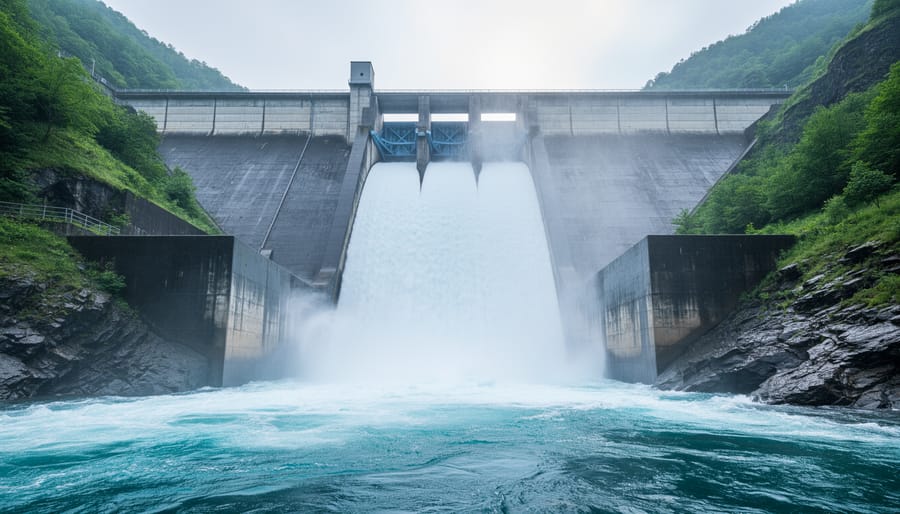
Net zero energy describes a building or structure that produces as much renewable energy on-site as it consumes over the course of a year, achieving a balance between energy use and energy generation. The concept represents one of the most practical pathways toward reducing carbon emissions from the built environment, where buildings currently account for nearly 40% of global energy consumption.
This balance isn’t about using less energy at every moment. Instead, net zero energy buildings combine two core strategies: aggressive energy efficiency measures that minimize consumption, and on-site renewable energy systems, typically solar panels, that generate clean power. During sunny afternoons, a net zero home might produce more electricity than it needs, sending the surplus back to the grid. On cloudy days or at night, it draws from the grid to make up the difference. Over a full year, the energy flows even out.
The practical appeal is straightforward. Net zero energy buildings slash utility costs, insulate occupants from volatile energy prices, and dramatically reduce greenhouse gas emissions without sacrificing comfort or functionality. In Canada, where heating demands are substantial and solar potential varies by region, achieving net zero requires careful design and technology choices, but thousands of homes, schools, and commercial buildings have already proven the model works across different climates.
This guide explains exactly how net zero energy functions, what components make it possible, where the approach is being applied, and what you need to know if you’re considering a net zero project for your own property.
What Net Zero Energy Means
Net zero energy represents a powerful balance: a building or system that generates as much renewable energy as it consumes over the course of a year. Think of it as a personal energy ecosystem where your home or building gives back to the grid during sunny summer months what it draws during darker winter periods. This annual energy balance definition means you’re not necessarily energy-independent every single day, but over twelve months, your renewable generation matches your consumption.
The concept matters because buildings account for a significant share of greenhouse gas emissions through heating, cooling, and electricity use. When a building reaches net zero energy, it stops adding to that carbon footprint. Instead of pulling from fossil-fuel-dependent grids, it creates clean electricity through solar panels or other renewable systems, offsetting every kilowatt-hour it uses.
- Net Zero Energy
- A building that produces as much renewable energy on-site as it consumes annually, measured in energy units (kilowatt-hours). The focus is on energy balance.
- Net Zero Carbon
- A building that eliminates or offsets all carbon emissions from its energy use and operations. This broader metric includes embodied carbon from construction materials.
- Carbon Neutral
- Achieving a net-zero carbon footprint through any combination of reductions and offsets, including purchasing carbon credits. It may not require on-site renewable generation.
- Renewable Energy Offset
- The process of balancing energy consumption with equivalent renewable generation, either through on-site systems or verified renewable energy certificates.
- Energy Balance
- The accounting method that tracks total energy consumed versus total renewable energy produced over a defined period, typically one year.
Understanding the distinction between these terms matters for setting realistic goals. The key difference in net-zero versus carbon-neutral approaches is that net zero energy requires actual on-site renewable generation, while carbon neutrality can be achieved through offsets alone. For Canadian homeowners and businesses exploring solar energy solutions, net zero energy offers the most direct path to energy independence and long-term cost savings.
How Net Zero Energy Works
Energy Efficiency: The Foundation
Before a single solar panel goes up, achieving net zero energy starts with using less energy in the first place. Think of it this way: the best kilowatt-hour is the one you never need.
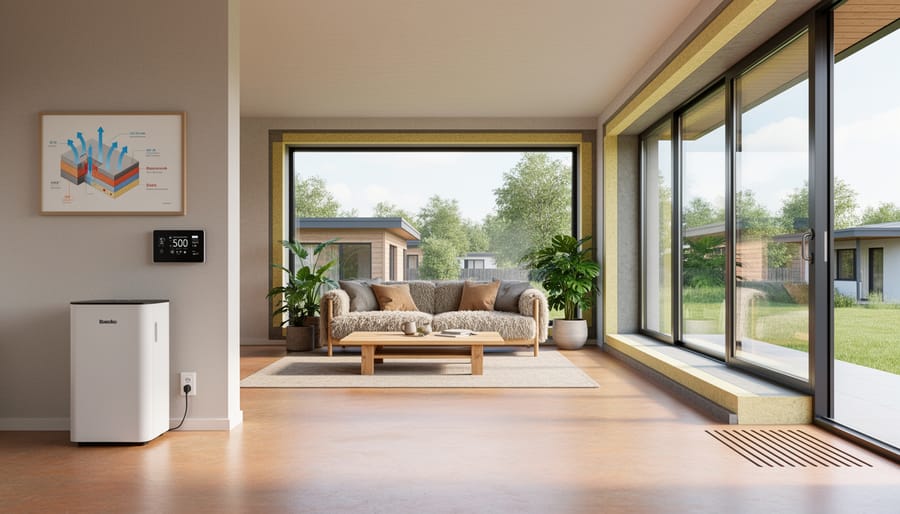
Insulation in walls, roofs, and foundations acts as a thermal blanket, keeping heat inside during Canadian winters and outside during summer. Pair that with air sealing, caulking gaps around windows, doors, and penetrations, to stop drafts that waste conditioned air. Together, these measures can cut heating and cooling needs by 40% or more.
High-performance windows with triple glazing and low-emissivity coatings prevent heat loss while letting natural light in. LED lighting uses 75% less electricity than incandescent bulbs and lasts years longer. Energy Star-rated appliances, from refrigerators to heat pumps, deliver the same service while drawing far less power.
Smart building design amplifies these gains. Positioning windows to capture winter sun, adding shading for summer, and orienting the building to minimize exposure to prevailing winds all reduce mechanical heating and cooling loads. This efficiency-first approach shrinks the amount of renewable energy needed, making net zero achievable and affordable.
Renewable Energy Generation
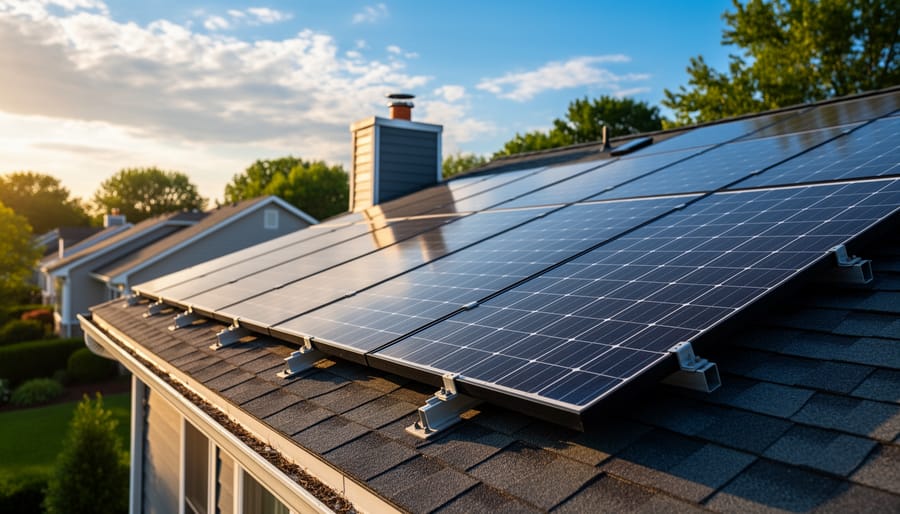
Once you’ve minimized energy demand through efficiency, the next step is generating clean electricity on-site to match your remaining consumption. In Canada, solar photovoltaic panels are the cornerstone of most net zero energy systems. These panels convert sunlight directly into electricity, and recent price drops have made them increasingly accessible for homeowners and businesses across the country. A well-designed solar array can produce enough power during sunny months to offset darker winter periods when you’ll draw more from the grid.
Beyond solar PV, other renewable technologies contribute to net zero goals depending on your property and climate. Solar thermal systems capture heat from sunlight for domestic hot water or space heating, reducing electricity or gas consumption. Where conditions allow, small wind power turbines can supplement solar generation, particularly in open rural areas with consistent winds. Geothermal heat pumps tap into stable underground temperatures to provide highly efficient heating and cooling, dramatically cutting the energy your solar panels need to produce. The combination you choose depends on your site characteristics, but solar energy typically forms the backbone of any Canadian net zero system.
Types of Net Zero Energy Buildings and Systems
Net zero energy principles scale across diverse applications, from individual homes to entire communities. Understanding these different types helps clarify where the concept applies and how implementation strategies vary by building type and grid connection approach.
Residential Buildings
Single-family homes represent the most common net zero application in Canada. These dwellings combine superior insulation, triple-pane windows, and rooftop solar arrays sized to match annual consumption. New net zero homes integrate these features from the design phase, while existing homes achieve net zero status through comprehensive retrofits that address the building envelope first, then add renewable generation.
Multi-family buildings, condominiums, townhouses, and apartment complexes, face unique challenges due to shared walls, limited roof space per unit, and split ownership structures. Successful projects maximize available solar area through both rooftop and vertical installations, while deep energy efficiency measures reduce the total generation needed.
Commercial and Institutional Buildings
Commercial offices, retail spaces, and institutional buildings like schools and libraries increasingly adopt net zero targets. These structures benefit from larger roof areas relative to floor space and often have daytime energy peaks that align with solar production. Schools serve as particularly effective demonstration projects, combining educational value with operational savings that redirect funds to core programs.
Scale and Application Types
Net zero energy applies across multiple building categories and community scales:
- Single-family homes: Detached houses with dedicated solar arrays and individual energy systems
- Multi-family buildings: Condos, townhomes, and apartments sharing common renewable energy infrastructure
- Commercial offices: Workplaces integrating efficiency, daylighting, and rooftop solar generation
- Schools and institutions: Public buildings demonstrating net zero feasibility while educating communities
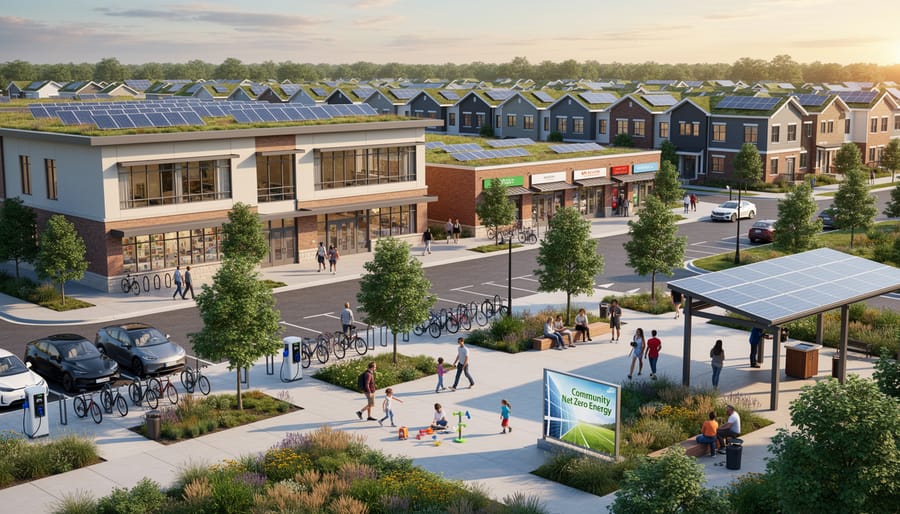
- Net zero communities: Entire neighbourhoods designed with shared renewable systems and district energy
- Industrial facilities: Manufacturing and warehouse buildings leveraging large roof areas for solar capacity
Grid-Connected vs. Off-Grid Net Zero
Grid-connected net zero systems remain connected to the electrical grid, using it as a virtual battery. During sunny periods, excess solar generation flows to the grid, earning credits or payments through net metering programs. The building then draws from the grid during evenings or cloudy days, with annual consumption and production balanced over twelve months. This approach dominates Canadian net zero projects because it eliminates the cost and complexity of large battery systems.
Off-grid net zero buildings operate independently from the electrical grid, relying entirely on on-site generation and battery storage. These systems require larger solar arrays to account for seasonal variation and substantial battery capacity to bridge periods without sun. Off-grid solutions make sense in remote locations where grid connection costs exceed system expenses, but represent a small fraction of net zero buildings nationwide.
The grid connection distinction matters because it affects system design, costs, and reliability differently across building types and locations.
Key Components of a Net Zero Energy System
A net zero energy system brings together several specialized components, each playing a distinct role in reducing consumption and generating clean power. These technologies work as an integrated whole, balancing efficiency with on-site renewable production.
Solar photovoltaic panels form the primary generation source for most net zero buildings in Canada. These panels convert sunlight into electricity year-round, even during overcast winter days. A typical residential installation might range from 5 to 10 kilowatts, sized to match annual consumption after efficiency measures are in place. Roof orientation, tilt angle, and shading all affect output, so proper design matters. In Canadian climates, snow shedding and cold-weather performance become practical considerations, panels actually operate more efficiently in cooler temperatures, offsetting some of the shorter winter daylight.
Battery storage systems capture excess solar generation for use during evenings and cloudy periods. While grid-connected homes can export surplus power, batteries provide independence and resilience during outages. A 10 to 15 kilowatt-hour system typically handles overnight loads for an efficient home. Costs have dropped substantially, making storage increasingly accessible for Canadian homeowners pursuing true energy autonomy.
Heat pumps replace traditional furnaces and air conditioners, moving heat rather than burning fuel. Air-source models extract warmth from outdoor air even at -25°C, while ground-source systems tap stable underground temperatures. These devices operate on electricity, which your solar panels can provide, eliminating direct fossil fuel consumption for heating and cooling. Modern cold-climate heat pumps maintain efficiency in Canadian winters, delivering three to four units of heat for every unit of electricity consumed.
The building envelopewalls, roof, foundation, windows, and air barrier, determines how much energy you’ll need in the first place. Triple-pane windows, continuous exterior insulation, and meticulous air sealing reduce heating and cooling loads by 50 to 70 percent compared to conventional construction. This foundation makes renewable generation feasible at reasonable system sizes.
Energy monitoring systems track real-time consumption and production, revealing patterns and opportunities for adjustment. Smart thermostats, lighting controls, and appliance scheduling shift loads to match solar generation peaks, maximizing self-consumption. These digital tools transform occupant behaviour from passive to actively engaged, closing the gap between design targets and actual net zero performance.
Where Net Zero Energy Is Used Today
Net zero energy buildings are shifting from experimental demonstration projects to mainstream construction and renovation across Canada. The residential sector leads adoption, with thousands of homeowners retrofitting existing houses and new developments achieving net zero certification through high-performance envelopes paired with rooftop solar arrays. Single-family homes in British Columbia, Ontario, and Alberta regularly generate all their annual electricity needs from solar panels while advanced insulation and heat pumps minimize consumption.
Institutional buildings showcase the feasibility at larger scales. Schools across Canada, including facilities in Edmonton and Toronto, now operate as net zero campuses, using expansive roof areas for solar installations that power classrooms, gymnasiums, and administrative spaces while serving as living laboratories for students. Libraries, community centers, and municipal buildings follow similar approaches, demonstrating public sector commitment to Canada’s clean energy transition.
Commercial developers increasingly incorporate net zero design into office buildings, retail centers, and multi-unit residential complexes. These projects combine solar canopies over parking areas, building-integrated photovoltaic systems, and shared battery storage to balance energy across larger footprints.
Community-scale implementations represent the next frontier. Net zero neighborhoods in Vancouver and Halifax integrate district energy systems, shared solar arrays, and coordinated energy management across multiple buildings, proving the concept works beyond individual structures.
Policy mechanisms accelerate adoption. Federal programs like the Canada Greener Homes Grant provide financial support for efficiency upgrades and solar installations, while provincial net zero building codes in British Columbia set mandatory standards for new construction. Municipal incentives, utility rebates, and preferential permitting processes further reduce barriers, making net zero achievable for diverse building types and budgets.
Benefits of Net Zero Energy Solutions
Net zero energy delivers measurable advantages that extend far beyond your monthly utility bill. On the environmental front, these buildings and systems eliminate or drastically reduce greenhouse gas emissions by replacing fossil fuel consumption with clean, renewable electricity, typically from solar panels in Canadian applications. This shift breaks our dependence on coal, natural gas, and oil for heating and power, directly addressing climate change at the source. Each net zero home or commercial building effectively becomes a small power station, generating clean energy instead of drawing from carbon-intensive grid sources.
The core benefits fall into three categories:
- Environmental: Zero or near-zero carbon emissions, reduced air pollution, preservation of natural resources
- Economic: Eliminated or minimal energy bills, protection from rate hikes, potential income from selling excess power back to the grid
- Social: Greater energy independence and resilience during outages, job creation in solar installation and energy efficiency sectors, healthier indoor air quality from improved ventilation and reduced combustion
Financially, net zero makes compelling sense over time. While upfront costs for solar panels, insulation upgrades, and efficient systems require investment, most Canadian homeowners see energy bills drop to zero or become small credits. You’re locked in against future rate increases, a hedge that grows more valuable as electricity and heating costs rise. In provinces with net metering programs, your system can generate revenue when production exceeds consumption.
Beyond individual buildings, net zero construction creates skilled trades jobs across Canada’s renewable energy sector. Communities benefit from distributed generation that reduces strain on aging grid infrastructure, and occupants enjoy better air quality since efficient, all-electric buildings eliminate indoor combustion. When comparing wind vs solar for residential net zero applications, solar consistently proves more practical for rooftop installation and neighborhood-scale deployment, making these benefits accessible to average homeowners rather than just large developments.
Common Questions About Net Zero Energy
Readers considering net zero energy solutions often have practical questions about feasibility, costs, and how these systems perform in real-world conditions. Here are answers to the most common concerns:
Can existing buildings become net zero energy?
Yes, though it’s more challenging than new construction. Existing buildings can achieve net zero through deep energy retrofits, upgrading insulation, windows, HVAC systems, and adding solar panels, but the investment is typically higher because you’re working within existing constraints.
How much do solar panels cost for a net zero home in Canada?
A residential solar system sized for net zero typically costs $15,000 to $35,000 before incentives, depending on home size and energy consumption. Federal and provincial rebates can reduce this by 25-40%, and the system pays for itself through eliminated electricity bills over 10-20 years.
What happens during winter when solar production drops?
Net zero buildings remain grid-connected, drawing power during low-production periods and feeding excess back during high-production months. The annual balance matters, summer overproduction offsets winter shortfalls, achieving net zero over the full year.
Does net zero mean going completely off-grid?
Not necessarily. Most net zero buildings stay connected to the grid for reliability and to export surplus energy. Off-grid systems require large battery banks and backup generators, making them costlier and less common than grid-tied net zero configurations.
How long does it take to reach net zero status?
Once your efficiency upgrades and renewable energy systems are installed, you achieve net zero immediately, the annual energy balance starts from day one. The financial payback period is different, typically ranging from 10 to 25 years depending on energy costs and system size.
Are net zero buildings more expensive to build?
New net zero construction adds roughly 5-10% to upfront costs compared to conventional builds, but these are offset by decades of minimal energy expenses. Retrofitting existing buildings to net zero typically costs more due to the complexity of working with established structures.
The path to net zero varies by building type and climate, but the fundamentals remain consistent. Canadian homeowners should evaluate their current energy consumption, identify efficiency improvements, and size solar systems accordingly. Winter performance is a valid concern in northern climates, yet thousands of homes across Canada already operate at net zero by banking summer credits against winter demand. Battery storage can enhance self-sufficiency, though it’s not required for most grid-connected applications.
Net zero energy represents a straightforward yet powerful concept: buildings and systems that generate as much renewable energy as they consume over the course of a year. This balance isn’t achieved through a single solution but through the combined strength of two complementary strategies. First, efficiency measures like improved insulation, air sealing, and high-performance appliances dramatically reduce energy demand. Then, renewable generation systems, particularly solar panels, produce clean electricity to meet those reduced needs.
Across Canada, this approach is reshaping how we think about buildings and energy use. Homeowners, institutions, and businesses are discovering that net-zero energy solutions offer more than environmental benefits. They deliver energy independence, long-term cost savings, and resilience against rising utility rates.
The momentum is undeniable. Solar technology continues to become more accessible and affordable, while battery storage systems improve each year. Government incentives and building codes increasingly support net zero construction and retrofits. What once seemed like a niche concept for early adopters has evolved into a practical, achievable goal for communities nationwide. The path to a clean energy future is clear, and it starts with the decisions we make about the buildings we live and work in today.