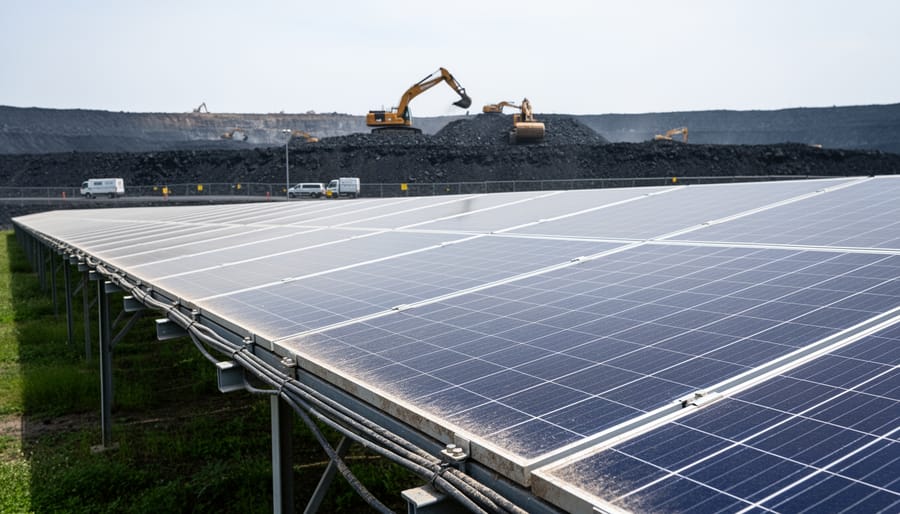
“7 energy sunrise” points to one big shift: solar power is starting its work earlier, with smarter timing and more flexibility than the old noon-peak model ever allowed. For Canadian homeowners, schools, and businesses, that means rethinking when solar energy gets produced, stored, and used, starting with the first light of the day.
Sunrise has long been treated as the quiet part of the solar story. Panels produce little at dawn, and most planning has focused on the midday peak. That’s changing. Better panel technology that captures low-angle light, smarter batteries that shift power to the hours you need it, and tools that match household demand to solar output are making the early hours count. In Canada, where winter mornings are dark and cold and summer days stretch long, this matters even more.
This edition of Sun Mining Energy News and Updates walks through seven developments shaping how solar fits into the start of the day, and what each one means for everyday energy choices.
Let’s start with what has changed, and why the sunrise hours are finally getting the attention they deserve.
What Changed: Why the Sunrise Hours Are Getting New Attention
Solar planning used to focus on one question: how much power will a system make at midday? Now people are asking a better one: how does that power build up, hour by hour, starting at first light?
That gradual build-up is called the solar ramp. Photovoltaic (PV) panels, the technology that turns sunlight directly into electricity, begin producing as soon as daylight reaches them. Output climbs through the morning, peaks around midday, and tapers off in the evening. The morning climb is what’s getting fresh attention.
Here’s why it matters. Homes and businesses wake up and use more electricity at the start of the day, which pushes demand toward what utilities call peak demand, the times when the most power is being used at once. If solar is ramping up as that demand rises, it can help cover the need. If it isn’t, the grid has to find power elsewhere. Utilities handle this through grid balancing, the constant work of matching electricity supply to demand second by second. Homeowners can use the same idea to decide when to run appliances or charge a battery, and developers can use it to design systems that fit local usage patterns.
Canada adds its own twist. Long summer days stretch the productive window, while many regions get strong, bright winter sun, often with cold temperatures that help panels run efficiently. Good planning starts with understanding that rhythm.
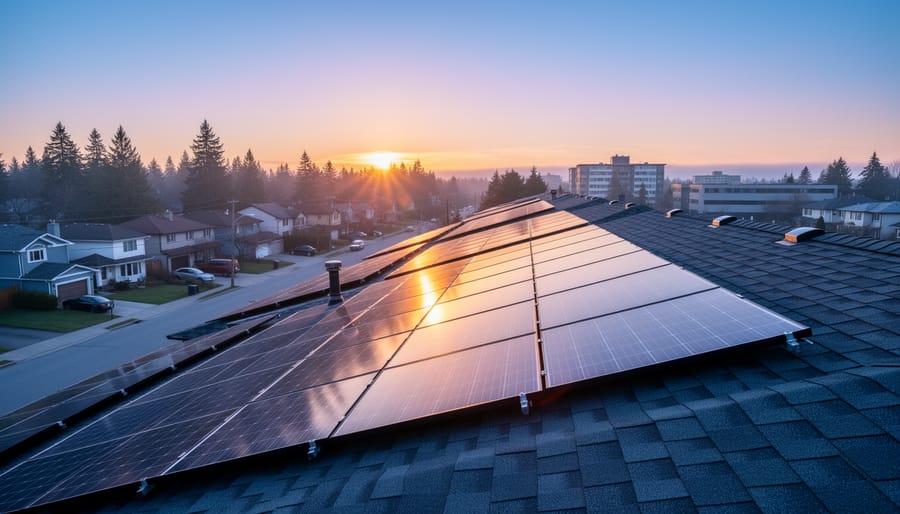
Seven Key Developments Shaping the Solar Sunrise Story
1. Solar Panels That Perform Better in Low, Early-Morning Light
Modern solar panels are better at making the most of weak, early-morning light than older models. Improved cell designs, such as passivated rear contacts and half-cut cells, reduce energy losses, so panels start producing power sooner after first light.
Bifacial panels add another advantage. “Bifacial” simply means the panel can collect sunlight on both its front and its back. In Canada, that matters because fresh snow reflects a lot of light upward, and the rear side can turn that glow into extra electricity. Research on bifacial in snowy conditions shows how this reflected light can boost output.
2. Battery Storage Making Morning Solar More Useful
Battery storage lets you save solar energy for the moments you actually need it. During sunny hours, panels often produce more power than a home uses, and a battery captures that extra electricity instead of sending it all back to the grid. Then, when demand picks up, such as during a busy early morning, the battery releases what it stored.
Two terms are worth knowing. Capacity is how much energy a battery can hold, usually measured in kilowatt-hours (kWh). A charge cycle is one full fill-up and use of that stored energy. Home batteries are built to handle thousands of cycles.
Interest is growing across Canada, from households to businesses and community projects, as people look for steadier, more resilient solar power.
3. Smarter Inverters and Grid-Friendly Solar
Solar panels produce direct current (DC) power, but your home and the grid run on alternating current (AC). That’s the inverter’s job: it converts DC into usable AC, making sunshine work with everything from your fridge to your laptop.
Modern smart inverters do more than convert. They can adjust their output in real time, helping utilities handle the morning ramp-up as thousands of systems wake with the sun. Research on smart inverter grid support shows these devices can help steady voltage and frequency as solar generation rises. The result is a reassuring one: more solar can join the grid while keeping power reliable for everyone.
4. Time-of-Use Pricing Encouraging Flexible Energy Habits
Time-of-use pricing charges different rates for electricity depending on the hour. Several Canadian provinces use time-of-use rate structures, with cheaper off-peak periods and pricier peak ones. That gives households a simple opportunity: run the dishwasher, laundry, or electric vehicle charger when rates are lower or when your panels are producing. Small shifts add up, and they put you in control of your own habits. Rates and schedules vary, so check your provincial utility for current details before planning around them.
5. Community and Remote Solar Projects Expanding Access
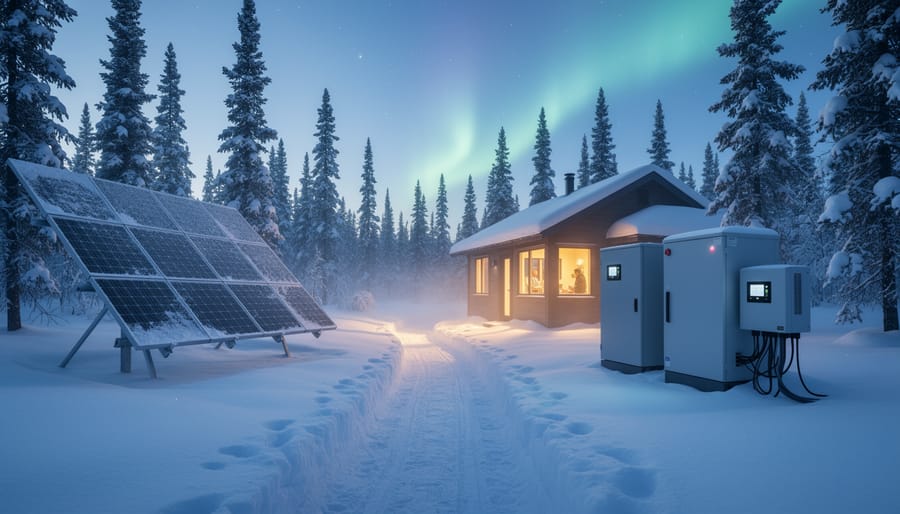
Across Canada, community solar and remote systems are widening who can benefit from the sun. Community solar lets several households or organizations share the output of one array, which helps people who rent, live in shaded homes, or cannot install panels themselves.
In northern, rural, and Indigenous communities that are not connected to the main grid, power often comes from diesel generators. Fuel has to be shipped in, and it can be costly. Pairing solar panels with batteries lets these communities offset a portion of that diesel, which can lower fuel costs, cut emissions, and reduce noise and spills. Local ownership and training also build skills and keep benefits close to home. Each community’s needs differ, so projects are shaped around local priorities.
6. Solar Pairing With Wind, Hydro, and Geothermal
Solar shines brightest at midday, so it helps to pair it with sources that cover the other hours. Wind often picks up in the evening and overnight, while hydro can ramp up or down quickly to fill any gaps. Canada is lucky to have a deep hydropower base, and if you’re curious how it works, What is hydropower is a friendly place to start. Geothermal adds a steady, around-the-clock baseload, a constant hum of clean power underneath it all. Together, these sources smooth out the ups and downs, giving communities a more balanced, reliable supply. Explore more in Sun Mining’s wider renewable coverage.
7. Better Forecasting and Monitoring Tools
Knowing what your panels will do before the sun comes up is a big part of what makes solar easy to live with. Modern weather forecasts can estimate cloud cover and sunlight hours for the day ahead, so owners and grid operators can plan around them.
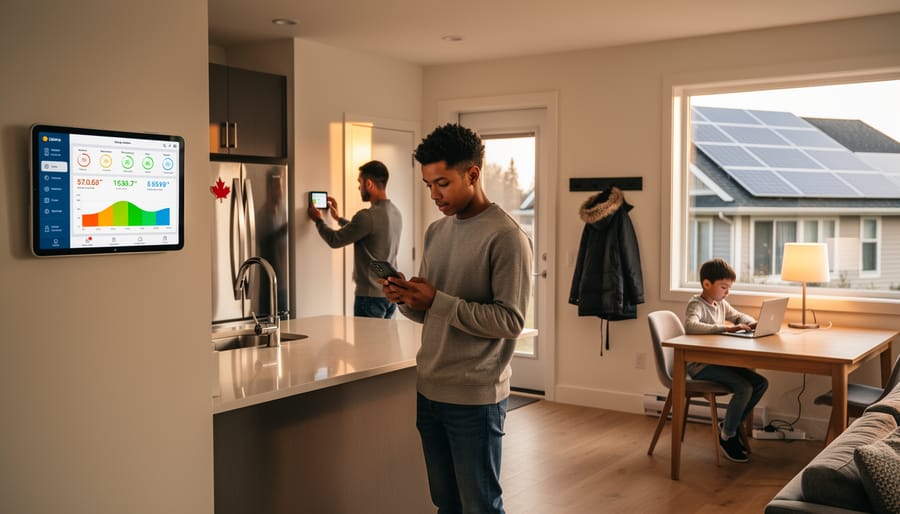
Smart meters add a second layer. These digital meters record how much power you generate and use, often in short intervals, which helps spot patterns from the first light of morning.
Monitoring apps put that information in your hands. Most show real-time output, daily totals and alerts if something looks off, such as snow covering the array. For beginners, that clear picture takes the guesswork out of going solar.
Why It Matters for Canadian Households, Schools, and Businesses
Solar’s real value shows up in everyday decisions. Cleaner electricity means lower emissions, and a more distributed energy supply is more resilient when the grid is under pressure. Savings can follow too, since every kilowatt-hour you generate is one you don’t have to buy. For a fuller picture of how homes are heading in this direction, our Sun Energy News Update is a good companion read.
Here’s who benefits most:
- Homeowners can trim electricity bills and take a step toward net zero energy.
- Educators and students get a hands-on way to learn about energy, data, and climate through real solar systems.
- Small businesses can steady their operating costs and show customers their sustainability commitment.
- Communities can build local, dependable power that keeps dollars and skills close to home.
Canada’s climate is friendlier to solar than many people expect. Cold temperatures actually help panels run more efficiently, and bright, snow-reflected light can add a little extra output. Short winter days and snow cover do call for planning, so consider panel tilt, snow clearing, and battery backup. A home upgrade can also improve your EnerGuide score which makes the whole effort feel even more worthwhile.
What to Watch Next in Solar and Renewable Energy
Solar and renewable energy move quickly, but a handful of storylines are worth following whatever the calendar says. Panel efficiency keeps creeping upward as manufacturers refine cell designs, which means more power from the same rooftop. Battery costs are another one to watch, since cheaper storage makes it easier to hold morning and midday solar for later use.
Closer to home, keep an eye on provincial program updates and utility rate changes. Incentives, net metering rules, and time-of-use pricing can shift, and those details shape how quickly a solar system pays off for your household, school, or business. Community project announcements are also worth tracking, especially in northern and remote regions where solar can reduce reliance on diesel.
Because programs and prices change, always confirm the latest details with official provincial and federal sources rather than relying on a single article. For ongoing coverage in plain language, keep following Sun Mining Energy News and Updates.
Common Questions About Sunrise Solar Energy
Do solar panels produce power at sunrise?
Yes, though output starts small and builds as the sun climbs. Modern panels capture usable energy even in low, early light.
Does cold weather hurt solar output in Canada?
Not usually. Cooler temperatures can actually help panel efficiency, though snow cover and short winter days need planning.
Can batteries store morning solar energy?
Yes, a home battery can hold solar power for use whenever you need it, including during the next morning’s routine.
Where can I learn more about renewable options?
Check your provincial utility for current rates and programs, and follow Sun Mining Energy News and Updates.
Every sunrise is a fresh chance to put clean energy to work.
From better low-light panels and smarter batteries to grid-friendly inverters, flexible rates, community projects, mixed renewables and sharper forecasting, the sunrise hours are one more reason solar keeps getting smarter and more accessible across Canada. Keep following Sun Mining Energy News and Updates, and explore solar and other renewable options for your home, classroom, or community. The future looks bright.